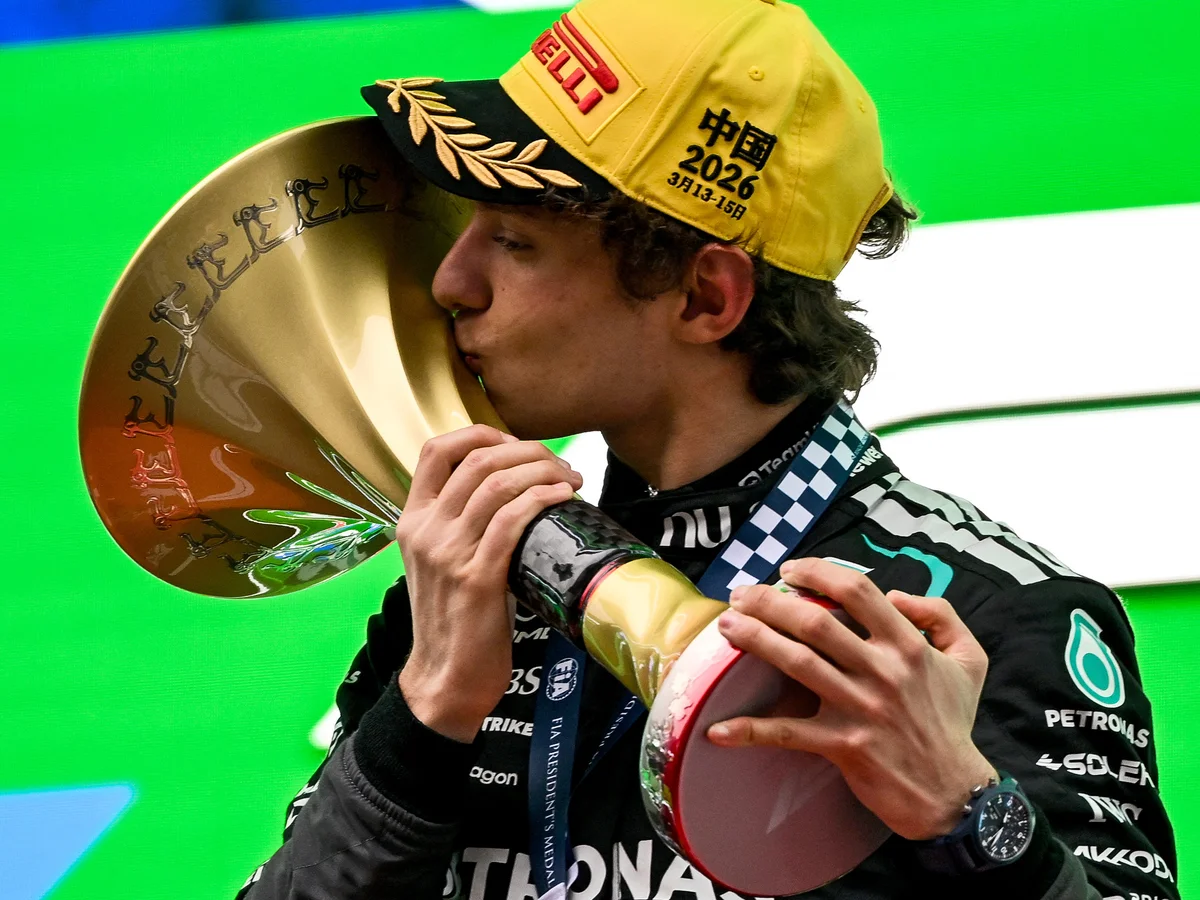
The 2026 Chinese Grand Prix delivered a tightly controlled race at the front, with George Russell leading Mercedes’ charge in Shanghai while rookie Andrea Kimi Antonelli continued to underline his growing presence in Formula 1.
In a race defined by tyre management and strategy execution rather than overtaking drama, Mercedes emerged as one of the standout performers, placing both cars in competitive positions throughout the event.
George Russell maintained composure across multiple stints to secure a strong finish for Mercedes, managing tyre degradation effectively on Shanghai’s demanding layout.
From the opening laps, Russell established himself within the leading group and avoided major threats through the pit cycle phase. His race was defined by consistency rather than aggression, ensuring track position was preserved as strategy windows unfolded.
The result reinforces Russell’s role as Mercedes’ primary reference point in the early stages of the 2026 season.
Antonelli Continues Upward Trajectory
Andrea Kimi Antonelli delivered another composed performance, operating comfortably within the competitive midfield-to-front pack.
The young Italian managed race pace efficiently and avoided costly errors, further building confidence within the Mercedes setup. His ability to adapt to race conditions — particularly tyre management and stint pacing — stood out across the duration of the Grand Prix.
Shanghai marks another step in Antonelli’s early-season development, with performances increasingly aligning with expectations placed on him ahead of his debut campaign.
Hamilton Faces Difficult Outing
Lewis Hamilton endured a more challenging race, struggling to match the pace of his teammate across key phases.
While remaining within points contention, Hamilton was unable to extract the same level of performance in tyre management and race consistency, leaving him outside the primary battle at the front. The result reflects a difficult weekend for the seven-time world champion as the season continues to evolve.
The Shanghai International Circuit once again highlighted the importance of tyre strategy, with teams balancing degradation against track position.
Most frontrunners opted for controlled stint lengths, prioritising consistency over aggressive overtaking attempts. The nature of the circuit limited on-track battles, placing greater emphasis on pit timing and tyre preservation.
Mercedes’ execution in this area proved decisive in securing their overall result.


