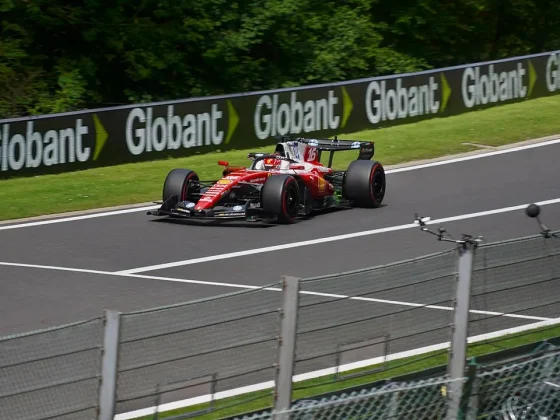
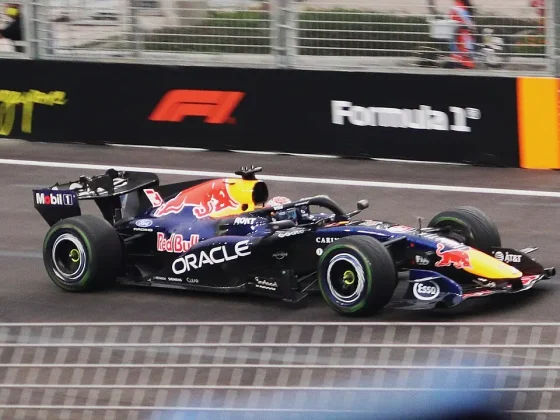
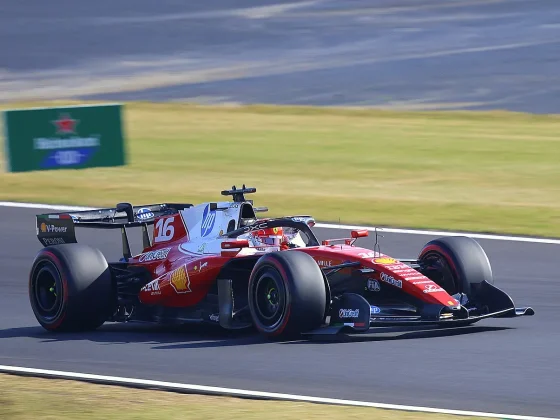
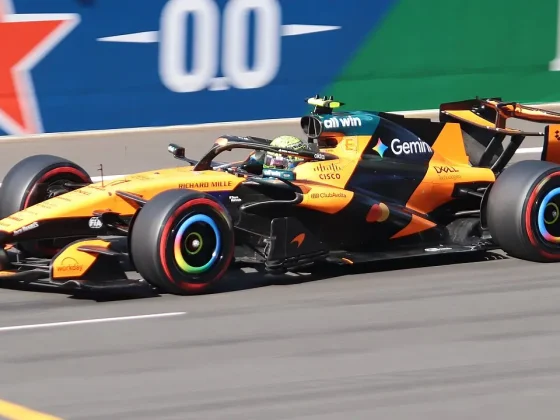
Formula 1’s six engine manufacturers have agreed to limit each supplier to two teams, including its own works squad, under the new V8 power unit rules planned for 2030, according to a Motorsport.com report that has since been widely relayed by Autosport, Crash.net, GrandPrix.com and others. The proposal would hit Mercedes hardest, as it currently powers three customer teams in addition to its own championship-winning outfit.
According to the reports, the two-team cap was contained within a wider FIA document setting out the 2030 framework, but was not part of the public announcement when the sport agreed in principle to return to V8 engines. The engine supply restrictions have not yet received final approval, with the FIA World Motor Sport Council expected to consider the framework next month.
Mercedes faces a customer squeeze
Mercedes, whose works team won this year’s constructors’ title as Kimi Antonelli took the drivers’ crown, supplies McLaren, Williams and Alpine. If the cap is ratified in its reported form, Mercedes would be able to keep only one of those three as a customer from 2030, leaving the other two to find a new partner.
Mercedes has not indicated which customer it would retain. Reports note that Alpine is in a particularly difficult position because parent company Renault recently sold its in-house engine programme, while McLaren and Williams are both understood to favour staying with Mercedes.
Brown says McLaren will stay with Mercedes
McLaren CEO Zak Brown made clear in Las Vegas that his team has no intention of abandoning Mercedes power or building its own engine. Brown said McLaren had looked at the idea in the past but was happy with Mercedes High Performance Powertrains (HPP), pointing to the manufacturer’s record of winning titles. Reports add that the accelerated 2030 timetable leaves little time for a team to establish an independent power unit programme.
Safety net and price cap
The framework reportedly retains an “obligation to supply” clause, under which the FIA can require a manufacturer to provide engines to an additional team if that team cannot find a supplier elsewhere. Customer supply payments would be capped at $18 million per season, according to the reports.
The pressure on Ferrari is expected to ease, as Cadillac is set to bring its power unit programme in-house by 2030. Cadillac recently confirmed it will stay with Ferrari power through 2029 before switching to its own GM engine.
The wider 2030 rules
The new power unit is set to be a turbocharged 2.1-litre V8, with electrical power limited to 200 kW. The power unit cost cap is reported to start at $190 million in 2030 and fall by $7.5 million a year to $160 million by 2034.
F1 had already agreed the V8 return in principle, with a 2030 start on the table. If the supply cap is confirmed by the World Motor Sport Council, the next few seasons are likely to bring a scramble among customer teams to secure engine deals for the new era, with Williams and Alpine the most exposed.